



























How do you inherit a condition?
We all inherit characteristics from our parents. Many of these are familiar to all of us, such as your height, the colour of your eyes and your hair colour etc. But conditions, too, can be (partly) hereditary. In the case of serious conditions this can already be established at birth, but conditions often develop at a later age. For some conditions you can have clinical genetic testing done.
Relationship between DNA and conditions
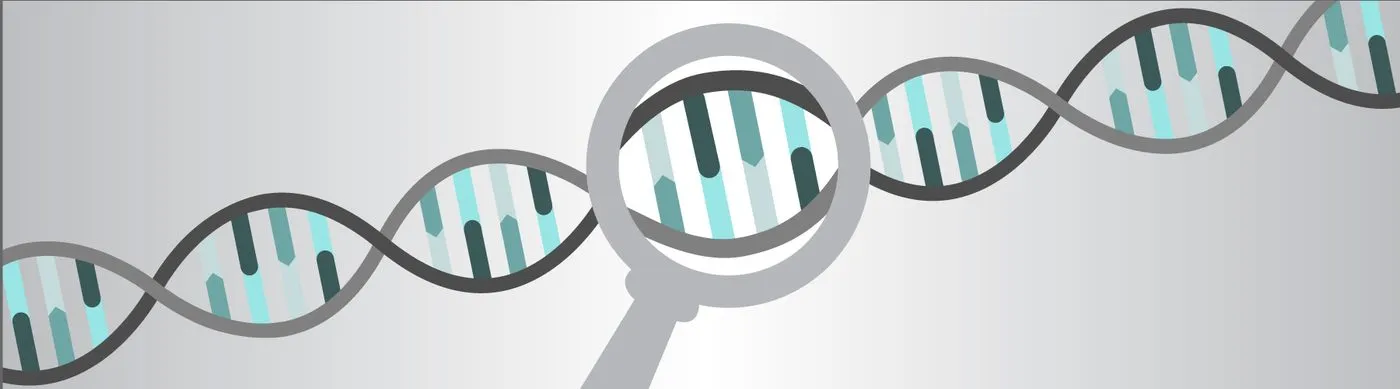
DNA is the carrier of hereditary information, stored in individual genes. Of each gene you inherit two; one half comes from your father, the other half from your mother. Humans have about 25,000 genes, which in turn are made up of small building blocks. Variations occur naturally in these building blocks; we call these SNPs. These variations often occur regularly and are relatively harmless. Some SNPs, however, are less harmless and can bring with them an increased or reduced risk of a certain condition. DNA variations that occur less often, but do have a (greater) influence on health, are called mutations.
Difference in heredity
The influence of genetic variations on developing a disease differs per condition.
Large impact of DNA mutations
With some conditions, a single mutation can already be responsible for the development of a disease. This is called an ‘autosomal dominant condition’. In this case, that one mutation leads to a defective gene, which you have inherited either from your father or from your mother (the parent in question will also have the same condition). In this case there is a 50% chance that you pass this mutation on to your child. An example of an autosomal dominant condition is Huntington’s disease.
With an ‘autosomal recessive condition’ there are two defective genes. Both parents are then ‘carriers’ of a defective gene, which in a single copy does not cause any symptoms of disease. When both parents pass on this defective gene, the child will develop this condition. Cystic fibrosis and most metabolic diseases are examples of this.
Spontaneous mutation
It is also possible for a mutation to arise spontaneously. This happens at fertilisation. At that moment you are the first in the family to have a mutation of this disease. At that moment you can also pass this mutation on to your own children.
Smaller impact of DNA variations
In the above cases the hereditary component is large: the condition will sooner or later develop. Fortunately, these conditions do not occur often. With the vast majority of common conditions, genetic variations do not play an all-determining role and disease risks are influenced to a lesser degree by heredity. For example, with cardiovascular disease, diabetes and various types of cancer, nutrition, lifestyle and environmental factors also play an important role in the development of the condition.
A DNA analysis by iGene maps the genetic component for these conditions: here it holds that genetic variations can slightly to moderately increase or reduce the risks of conditions, but that there are always other factors that also influence this risk.
Searching for a hereditary condition
If a certain condition occurs more often than average in your family, there may be a genetic predisposition. If you want to find out whether there is a hereditary condition, you can go to a clinical geneticist. For an appointment with a clinical geneticist you do need a referral from a doctor. Together with the clinical geneticist you look at your family tree and at the medical data of various relatives. After that, a targeted DNA analysis will take place.
At iGene you can also have a DNA analysis carried out, but this is not the same testing as with a clinical geneticist. At iGene, no autosomal dominant conditions are mapped. The research into hereditary forms of breast, ovarian and/or prostate cancer is also not 100% comprehensive. For this, we can detect about 90% of cases. You can read more about this theme in this blog.
Are you in doubt about whether you want DNA testing?
If you are in doubt about whether DNA testing is really for you, we have developed the quick check. By answering various questions you find out whether an iGene passport is something for you. If this is the case, you also immediately see which test best suits your wishes and questions.